Publication Design, Font Design
Agenda Outré
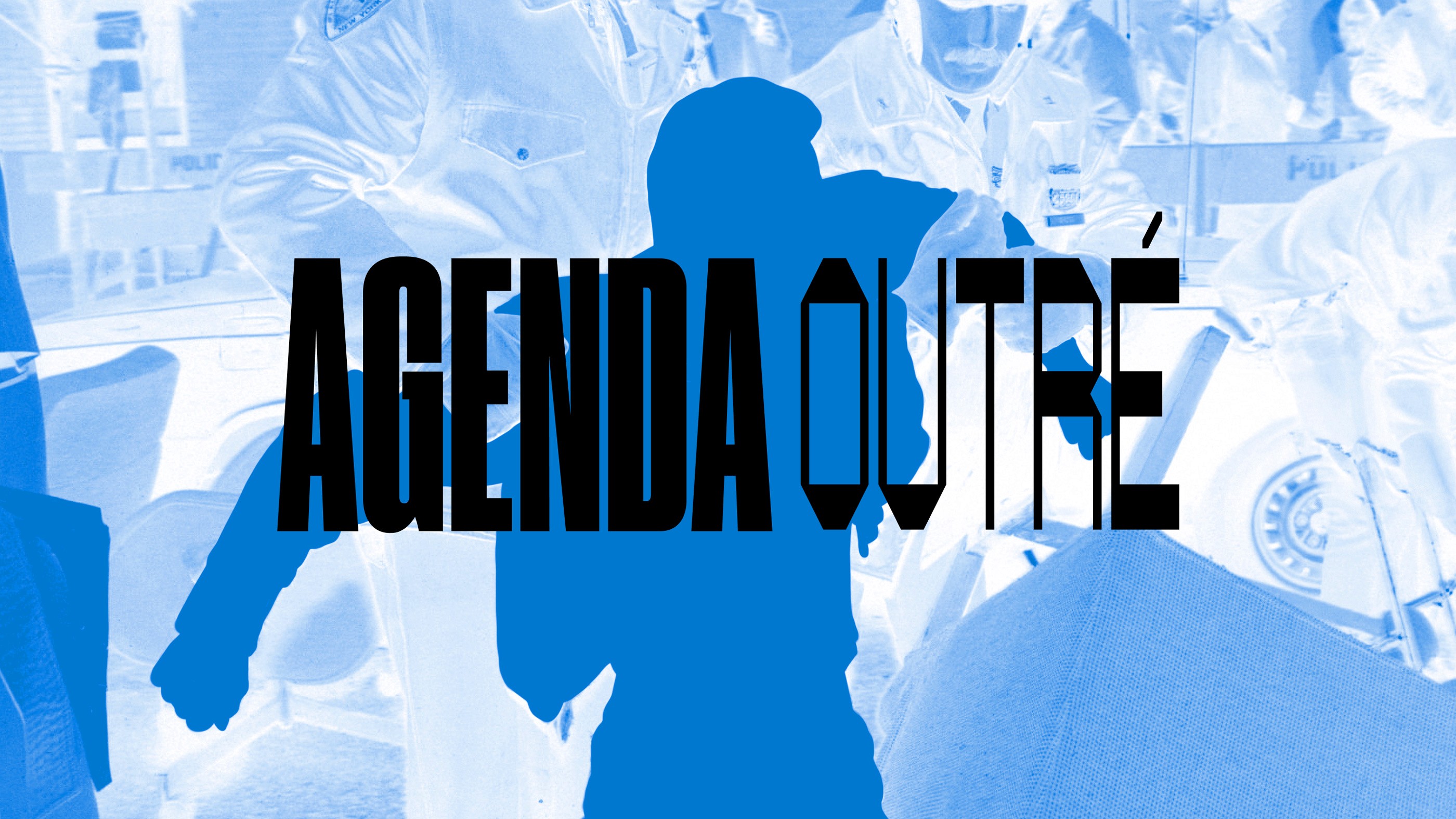
In February 1987, Michael Swift penned For the Homoerotic Order. Originally published in Gay Community News during the height of the AIDS epidemic, it was a rage-fueled, satirical manifesto meant as a creative release for the author amid crisis. Since its original publication, however, it has been co-opted by the Right as “proof” of a so-called Gay Agenda. The text has been cited in Congress and the Supreme Court when debating whether queer people deserve civil rights. With this project, I set out to recontextualize the story behind the manifesto and expose the hypocrisy of the Right’s own role in manufacturing the Gay Agenda.
Information
ArtCenter
MFA Program
credits
Manifesto by
Michael Swift
Images from
ONE Archives
Publication Design, Font Design
Agenda Outré
In February 1987, Michael Swift penned For the Homoerotic Order. Originally published in Gay Community News during the height of the AIDS epidemic, it was a rage-fueled, satirical manifesto meant as a creative release for the author amid crisis. Since its original publication, however, it has been co-opted by the Right as “proof” of a so-called Gay Agenda. The text has been cited in Congress and the Supreme Court when debating whether queer people deserve civil rights. With this project, I set out to recontextualize the story behind the manifesto and expose the hypocrisy of the Right’s own role in manufacturing the Gay Agenda.
Information
ArtCenter
MFA Program
credits
Manifesto by
Michael Swift
Images from
ONE Archives
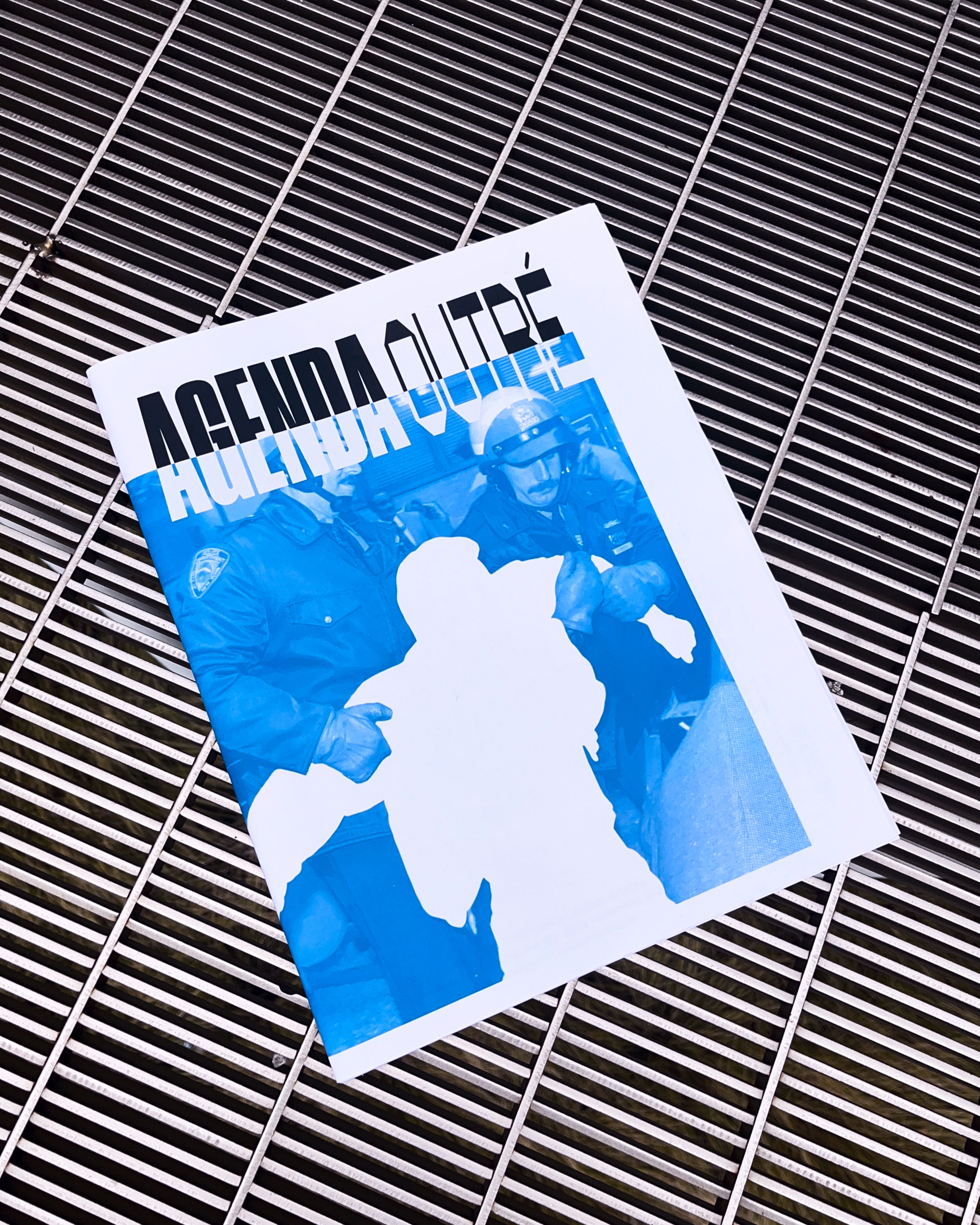
A tragic, cruel fantasy.
When cited by the Right, the opening sentence of Swift’s manifesto is always conveniently omitted. In it, Swift makes clear that the piece is satire, an “eruption of inner rage.” In designing this publication, I sought to channel that rage through design gestures and provocative imagery.
When curating the content for the publication, I chose to lead the first half with queer-focused content; republishing Swift’s manifesto in full, alongside contextual resources that highlight the cultural climate of that time. The second half exposes how the religious Right co-opted the manifesto’s language to push the Gay Agenda theory.
When cited by the Right, the opening sentence of Swift’s manifesto is always conveniently omitted. In it, Swift makes clear that the piece is satire, an “eruption of inner rage.” In designing this publication, I sought to channel that rage through design gestures and provocative imagery.
When curating the content for the publication, I chose to lead the first half with queer-focused content; republishing Swift’s manifesto in full, alongside contextual resources that highlight the cultural climate of that time. The second half exposes how the religious Right co-opted the manifesto’s language to push the Gay Agenda theory.
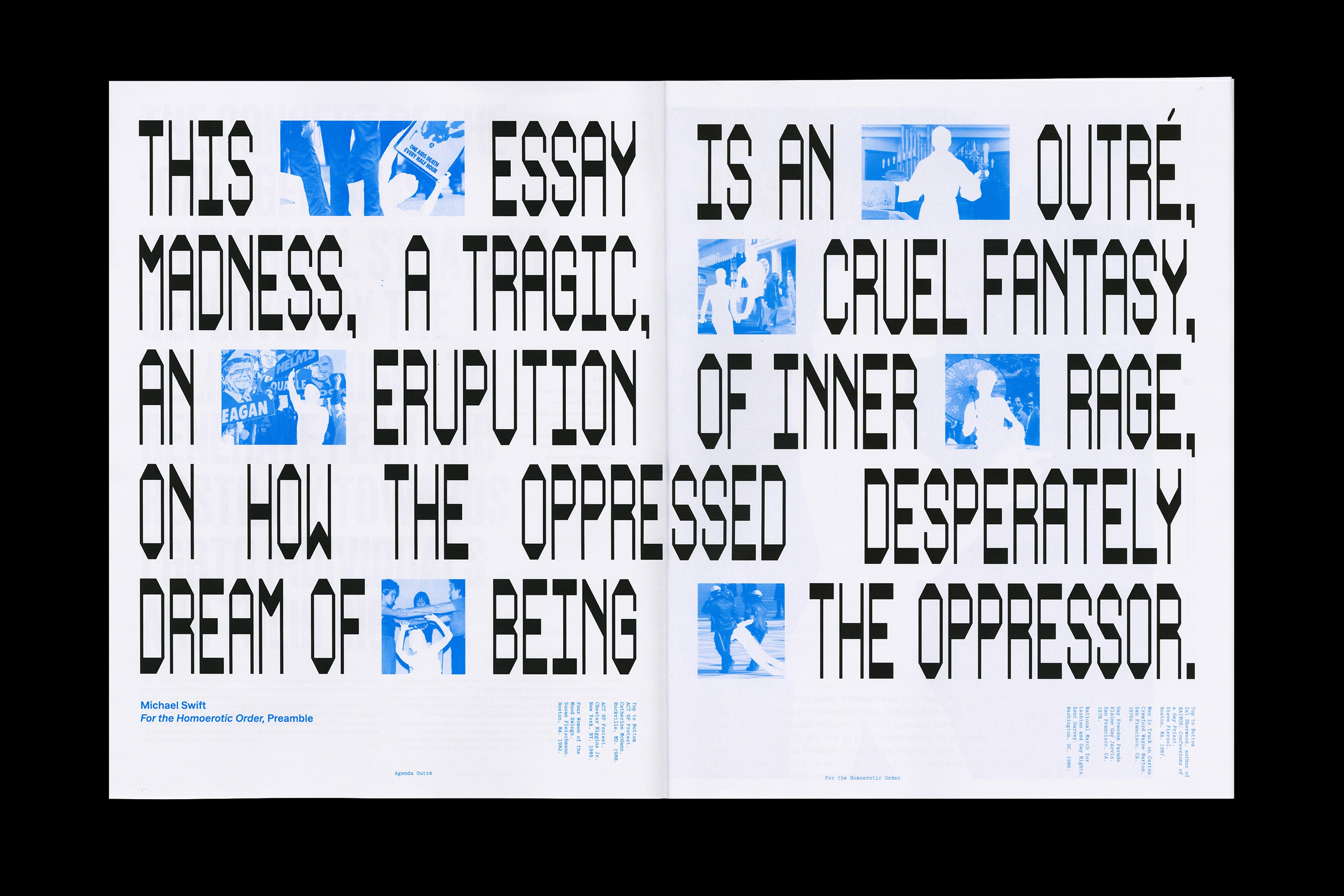
Body politic.
Swift’s manifesto was written during an era in which the queer community was largely ignored, and they were quite literally dying to have their voices heard. In drawing a visual parallel, I chose to erase their presence in images, leaving blank white space to signify their absence and loss.
Swift’s manifesto was written during an era in which the queer community was largely ignored, and they were quite literally dying to have their voices heard. In drawing a visual parallel, I chose to erase their presence in images, leaving blank white space to signify their absence and loss.
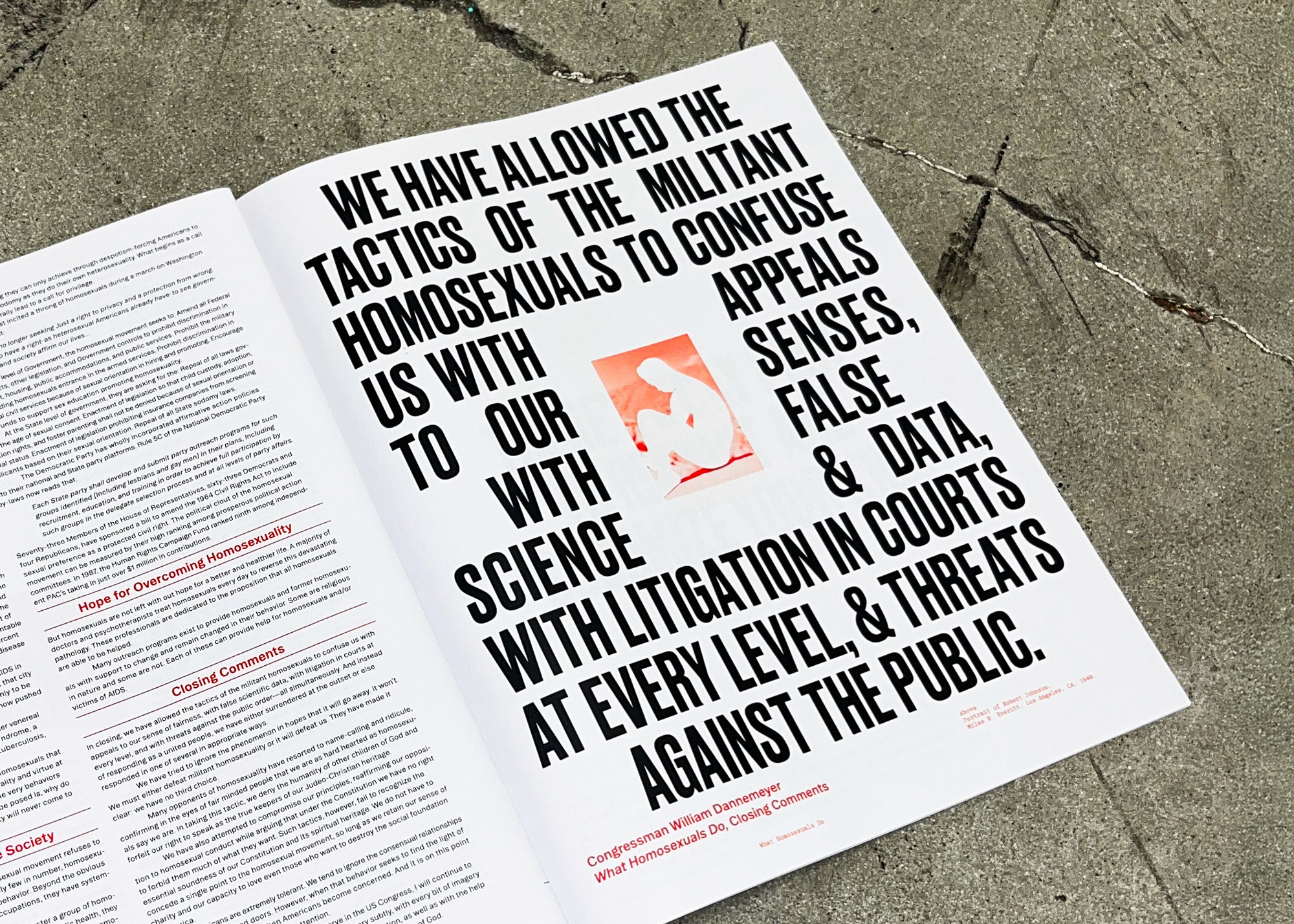
Pushed aside.
When conceptualizing how to treat the layout of the publication, I took inspiration from societal pressures. Content related to the voices of the queer community are pushed to the margins of the page, while material associated with the patriarchy and the Right remain centered.
When conceptualizing how to treat the layout of the publication, I took inspiration from societal pressures. Content related to the voices of the queer community are pushed to the margins of the page, while material associated with the patriarchy and the Right remain centered.
Form meets fury.
Directly inspired by the harsh language of Swift’s manifesto and the rigidity felt from living under oppression, I created a modular typeface that embodies the tightness and tension of that era.
Directly inspired by the harsh language of Swift’s manifesto and the rigidity felt from living under oppression, I created a modular typeface that embodies the tightness and tension of that era.
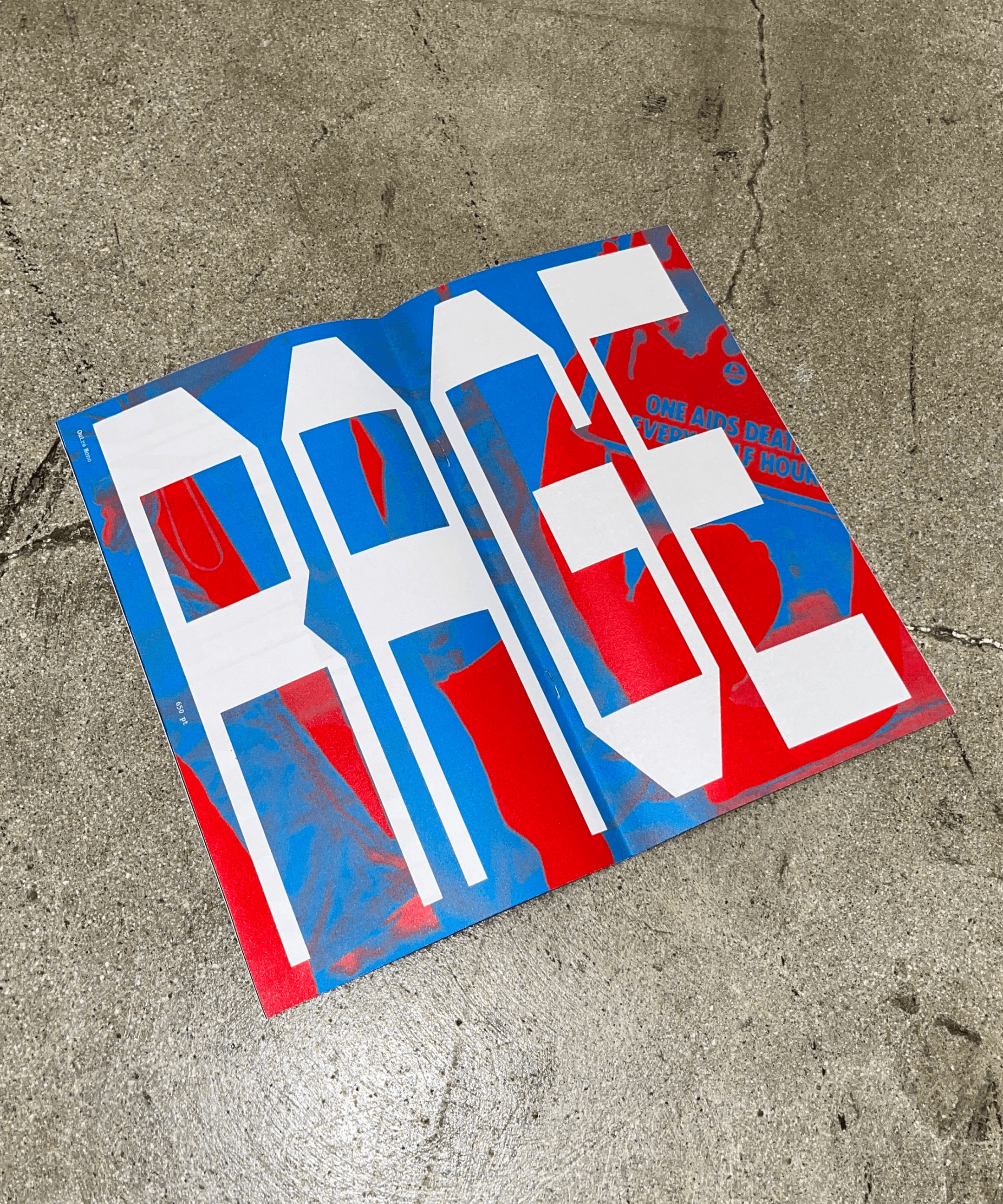
Type cast.
With the specimen booklet, I wanted to test the limits of legibility within the typeface, making the reading experience more intensive as a way to force the viewer to engage with the text consciously.
With the specimen booklet, I wanted to test the limits of legibility within the typeface, making the reading experience more intensive as a way to force the viewer to engage with the text consciously.
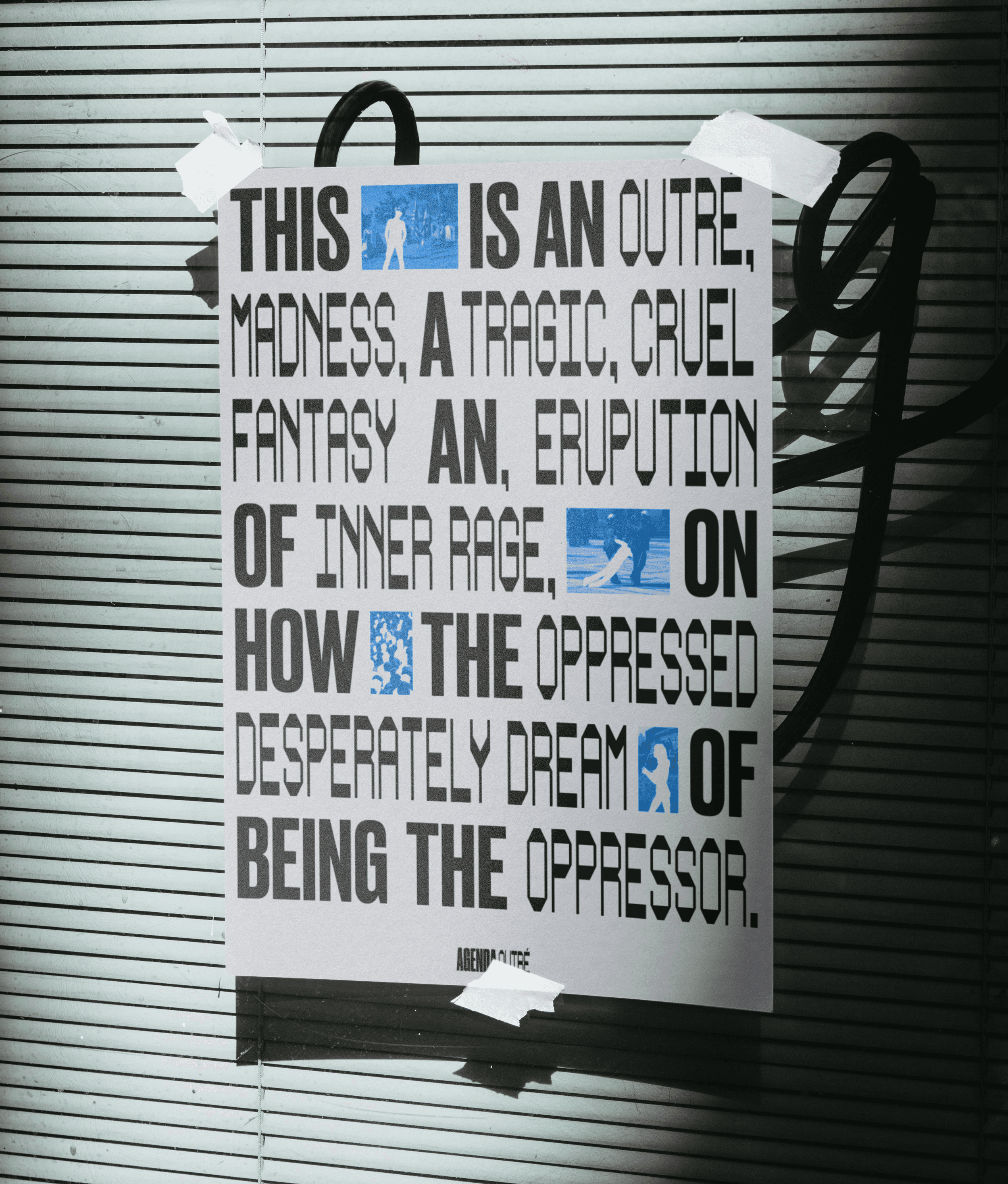
An eruption of inner rage.
Working on this project was nothing short of cathartic. Growing up in the South, I was never exposed to this era of queer history, and I couldn’t help but put myself in Swift’s shoes as he wrote his manifesto. The stories uncovered through my research ignited a passion to correct the narrative, especially as hostility toward the queer community continues to rise today.
Working on this project was nothing short of cathartic. Growing up in the South, I was never exposed to this era of queer history, and I couldn’t help but put myself in Swift’s shoes as he wrote his manifesto. The stories uncovered through my research ignited a passion to correct the narrative, especially as hostility toward the queer community continues to rise today.
Up Next
" height="442px" id="uvWWg5Gci" transform="translate(0 175)" width="2000.0199999999998px"/><path d="M 0 81.37 C 0 36.431 36.431 0 81.37 0 C 126.309 0 162.74 36.431 162.74 81.37 C 162.74 126.309 126.309 162.74 81.37 162.74 C 36.431 162.74 0 126.309 0 81.37 Z" fill="rgb(0, 0, 0)" height="162.73999999999978px" id="PMVDxkL9_" transform="translate(1431.5 0)" width="162.73999999999978px"/></g></svg>)